The forts
Submarine tunnels and Mamula
A former Yugoslav submarine tunnel on the Luštica coast and the round fort of Mamula: who built them, what they were for and what the boat tour shows.
Choose your boat date ↗Quick answer
Three disused submarine tunnels are cut into the rock on the northern coast of the Luštica peninsula, at the entrance to the Bay of Kotor. Showcaves says the Yugoslav Navy built them in the 1970s so submarines could enter underwater and surface inside. Mamula is a small round island nearby, almost filled by an Austro-Hungarian fort completed in 1853.
Where the tunnels are
Showcaves places the tunnels at the entrance to the Bay of Kotor, on the northern coast of the Luštica peninsula, near Kumbor. Wikipedia's article on Luštica says three disused submarine hides are cut into the rock of the steep coast on Herceg Novi bay and the Kumbor Strait. The boat tour makes a stop of about ten minutes to look at one and take photographs, usually from the water.
Who built them and why
Showcaves says the Yugoslav Navy built the tunnels in the 1970s, as a harbour for submarines. A submarine could enter underwater and surface inside, which protected it from air raids, and the tunnels could also take torpedo or missile boats. The same source says the Yugoslav Navy was disbanded in 1992 and that the tunnels were abandoned, so what you see is a Cold War relic.
What the tour shows
The tour includes a visit to a Yugoslav-era submarine tunnel, and the guide tells Cold War stories. Expect a photo stop, perhaps a slow look into the tunnel mouth from the boat, rather than a long exploration. Showcaves says visitors can explore the connected passages on foot only with a torch, which is not part of this trip.
Mamula, the round fort
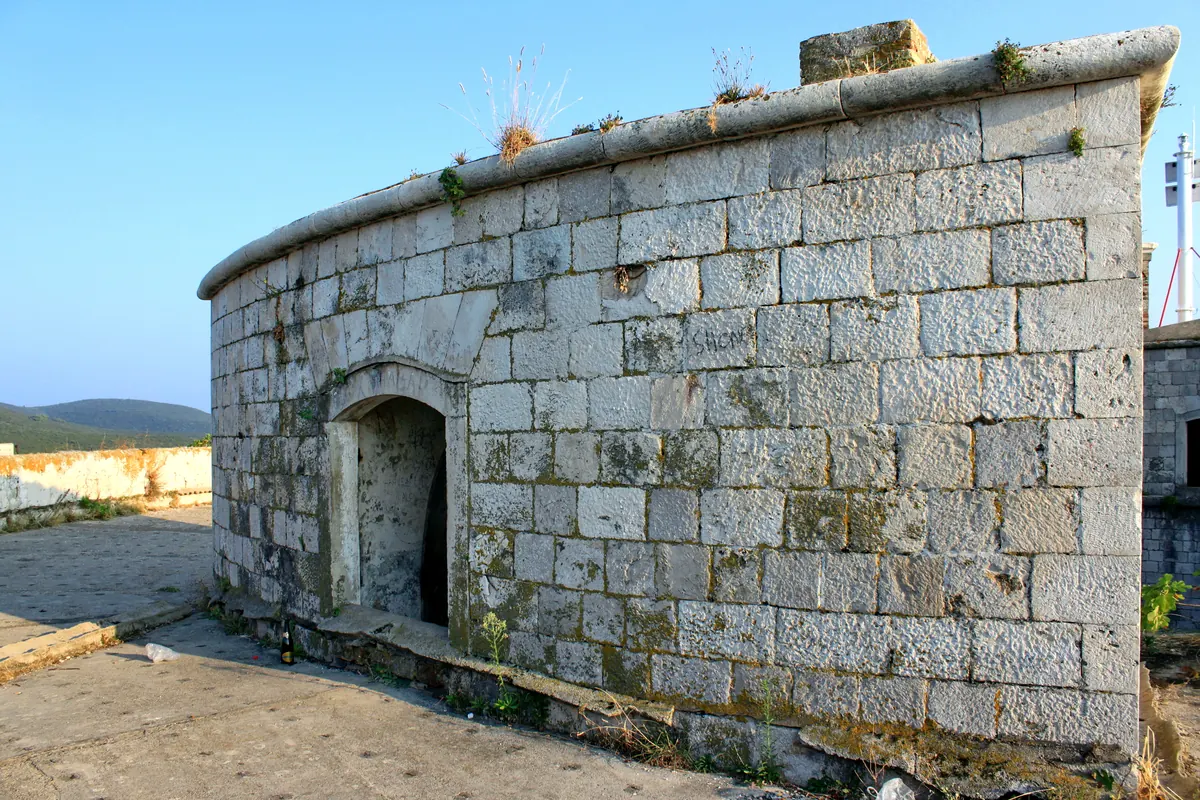
Wikipedia describes Mamula as an uninhabited islet between the Prevlaka and Luštica peninsulas at the entrance to the bay, about 200 metres across. The fort takes up about 90 percent of its surface and was built in 1853 by the Austro-Hungarian general Lazar Mamula. It formed part of a plan to stop an enemy entering the bay, along with forts at Cape Oštro and Cape Arza.
A darker chapter
Wikipedia says that from 30 May 1942 Italian forces turned the fort into a prison camp, and it describes the camp as known for cruelty to prisoners. The island has since been redeveloped, and Wikipedia says a resort has been complete there since 2023. The boat tour passes the island without stopping, so what you see is the outside of the fort and the bay behind it.
The Luštica peninsula
Wikipedia says Luštica is a peninsula at the entrance of the Bay of Kotor, about 13 kilometres long and 47 square kilometres in area, with its highest point at 582 metres. It effectively separates the Bay of Tivat from the Adriatic. It is lightly built up, with olive groves, small farms and villages, and a long military history because of its position guarding the entrance. The tunnels and the Blue Cave are both on its coast. Visitors who stay on the Luštica side find beaches such as Žanjice and Mirište, though the tour sees the coast from the water.
Forts at the entrance
Wikipedia says Mamula was built with two other fortifications, one on Cape Oštro at Prevlaka and one at Cape Arza on Luštica, all as part of Austro-Hungarian plans to prevent an enemy entering the bay. The Luštica article lists disused Austrian-built fortifications at Rose, Mamula and Arza. Together they show how much effort went into controlling a narrow sea entrance, long before submarines came to use it.
Why they sit together
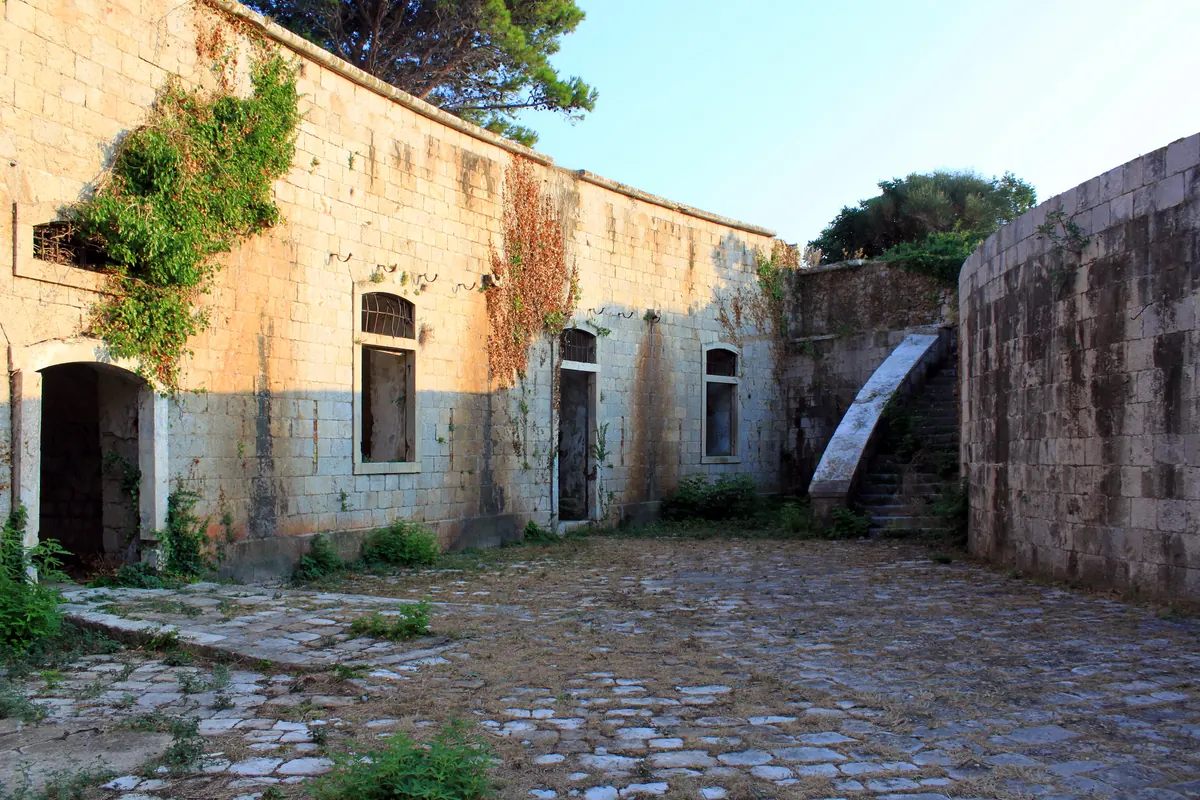
Both sites sit at the mouth of the bay, a place armies cared about for centuries because whoever held it controlled who could enter. Wikipedia's Luštica article lists disused fortifications at Rose, Mamula and Arza on the same stretch of coast. The tour places them in sequence, with the Blue Cave nearby, which is why a boat trip covers so much history in a short time.
Frequently asked questions
Who built the submarine tunnels?
The Yugoslav Navy built them in the 1970s, according to Showcaves.
Can I go inside the tunnel?
The tour makes a short stop to look and photograph. Showcaves says exploring the passages on foot needs a torch.
What is on Mamula today?
Wikipedia says the fort became a resort, complete since 2023. The boat passes without stopping.
Sources